
Case Studies
Protection in the Toughest Conditions™
Every reliable electrical system begins with protection. The enclosure is the first and last line of defence between your equipment and the real world, including heat, dust, salt, moisture, impact, vandalism, and everything in between.
On this Case Studies page, you can explore how IP Enclosures solutions are applied across different industries. Each case study shows how careful enclosure selection, correct materials, and proven IP/IK ratings translate into real reliability on site.
These examples are based on common projects and local conditions. They are written without naming specific customers to focus on the engineering principles applied.
Why electrical enclosure selection matters
An enclosure is more than a metal box. It is a structural, thermal, and environmental control system that:
- Protects people from live parts
- Protects equipment from dust, water, chemicals, and impact
- Manages heat build-up to enable electronics to operate within their design limits
- Resists corrosion in coastal, industrial, and washdown environments
- Maintains compliance with standards such as IEC/EN 60529, IEC/EN 62208, IEC/EN 61439, UL, CE and UKCA
Selecting the correct enclosure including material, IP rating, size, accessories and climate control has a direct impact on performance, safety, and lifecycle cost. The case studies below demonstrate how this contributes to project success in mining, water, transport, renewable energy, and food & beverage applications.
Industries and environments covered
The case studies reflect typical projects in:
- Mining and Heavy Industry: Remote sites, high dust, vibration, and extreme temperatures.
- Water and Wastewater: Coastal pump stations, high humidity, and corrosive atmospheres.
- Transport, ITS and Telecommunications: Roadside cabinets, data racks, and smart city infrastructure.
- Renewable Energy: Solar farms with high UV, heat, and dust.
- Food & Beverage: Hygienic IP69K enclosures in harsh washdown zones.
Across each sector, the focus is the same: Proven IP and IK performance, material selection for the environment, and practical solutions that installers and operators can maintain with confidence.
Featured Case Studies
Below is a summary of each case study. Follow the links to read the full detail, including challenges, solution, products used, and results.
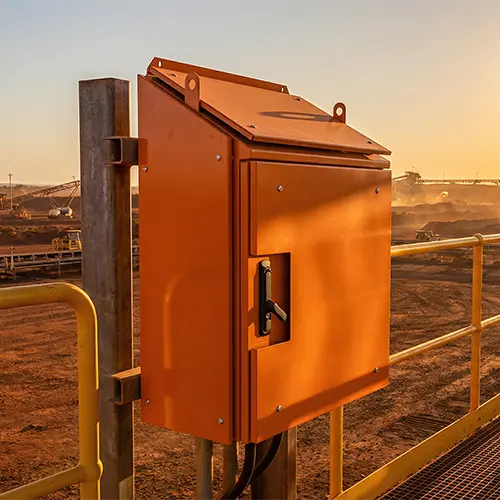
Mine-Spec Control Systems for a Remote Iron Ore Operation
A large iron ore operation in a remote region needed to upgrade conveyor and dewatering pump control systems. Existing panels were suffering from corrosion, dust ingress, and heat build-up, causing unplanned trips and downtime.
The case study explains how:
- IP66 mine-spec stainless steel enclosures and powder-coated steel enclosures were standardised across the site.
- Sun shields and climate control were used to handle high ambient temperatures.
- A consistent enclosure platform improved reliability, simplified spares, and supported strict production targets.
Use this case study if you are interested in: Mining applications, remote sites, harsh industrial environments, and mine-spec enclosure design.
Read the full case study: Mine-Spec Control Systems for a Remote Iron Ore Operation

Corrosion-Resistant Pump Station Control for Coastal Water Infrastructure
A coastal water authority needed to modernise sewer and stormwater pump station controls. Mild-steel enclosures were failing due to salt-laden air, internal condensation, and limited space at existing sites.
In this case study you’ll see how:
- IP66 grade 316L stainless steel enclosures were used for all external pump station and telemetry panels.
- Anti-condensation heaters and thermostats controlled internal moisture
- Compact, high-integrity stainless steel cabinets improved corrosion resistance and simplified long-term maintenance.
Use this case study if you are interested in: Water and wastewater projects, coastal environments, corrosion-resistant design, and condensation control.
Read the full case study: Corrosion-Resistant Pump Station Control for Coastal Water Infrastructure
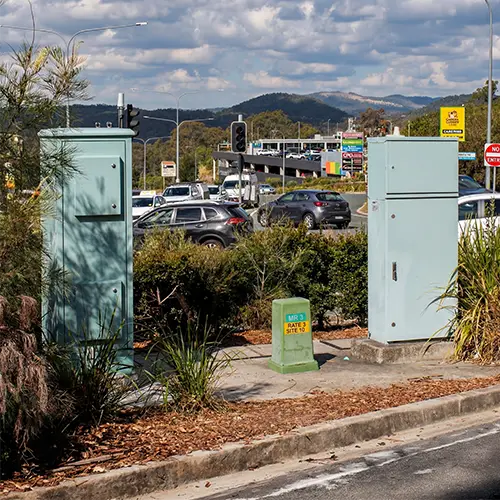
IP66 19″ Cabinets for Roadside Communications & Smart City Infrastructure
A state road authority was expanding an intelligent transport system with CCTV, sensors, and variable message signs. Network equipment needed to be housed in compact roadside racks, exposed to weather, road grime, and occasional vandalism.
This case study outlines how:
- IP66 pole-mounted and floor-mounted 19″ cabinets were deployed across a metropolitan road network to house both power distribution and communications hardware.
- Standard rack layouts, accessories, and climate control allowed fast roll-out and easier maintenance across many sites.
Use this case study if you are interested in: ITS, smart city infrastructure, roadside cabinets, and outdoor 19″ data racks.
Read the full case study: IP66 Data Racks for Roadside Communications & Smart City Infrastructure
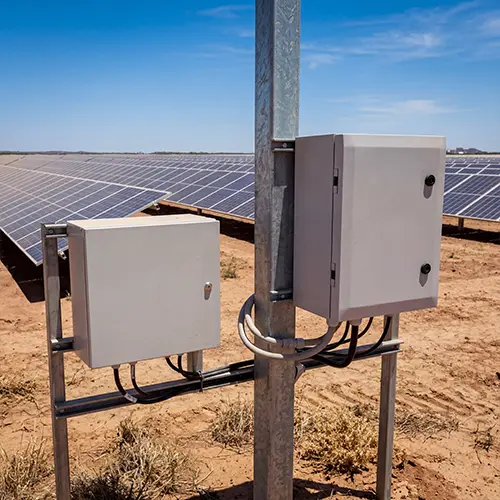
Solar Farm Combiner & SCADA Enclosures in High-Temperature Conditions
A utility-scale solar farm in a high-irradiance region required a standard enclosure platform for combiner boxes, LV distribution, and SCADA systems. Extreme solar loading, dust, and large temperature swings had to be managed without sacrificing uptime.
The case study describes how:
- Powder-coated steel enclosures were used for LV and SCADA applications where mechanical robustness and thermal mass are beneficial.
- FIBOX ARCA high-performance polycarbonate were used on DC Combiner box installations.
Use this case study if you are interested in: Solar farms, renewable energy projects, thermal management, and enclosure selection in high-temperature environments.
Read the full case study: Solar Farm Combiner & SCADA Enclosures in High-Temperature Conditions
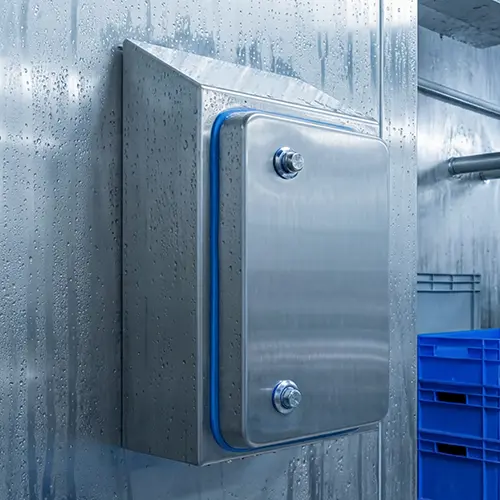
Hygienic IP69K Enclosures for a Food & Beverage Processing Line
A food processing facility needed to upgrade control enclosures in a high-intensity washdown area. Legacy enclosures with flat tops and exposed hardware created hygiene risks and were frequently damaged by high-pressure, high-temperature cleaning.
In this case study you’ll learn how:
- IP69K hygienic stainless steel enclosures with sloping roofs and smooth surfaces improved cleaning and drainage.
- 316L stainless steel construction with hygienic hardware resisted aggressive cleaning chemicals.
- A combination of IP69K washdown enclosures and IP66 stainless steel cabinets in adjacent zones lowered maintenance and extended asset life.
Use this case study if you are interested in: Hygienic design, food & beverage, IP69K washdown enclosures, and compliance in harsh cleaning environments.
Read the full case study: Hygienic IP69K Enclosures for a Food & Beverage Processing Line
How these case studies can help your project
These case studies are designed to be practical. Each one:
- Starts with the real environmental and operational challenges.
- Shows how enclosure selection, materials, ratings, and accessories were chosen.
- Guides the selection of standard IP Enclosures product ranges and accessories.
- Highlights measurable improvements such as uptime, reduced maintenance, and simplified standardisation.
You can use them to:
- Validate enclosure concepts for your own projects.
- Explain enclosure decisions to stakeholders, clients, or approvers.
- Identify which IP Enclosures ranges are best suited to your environment.
- Start a conversation with our team about mining, water, transport, renewable, or food & beverage applications.
Plan your next project with IP Enclosures
Whether you are designing a new plant, expanding an existing system, or standardising an organisation-wide enclosure platform, selecting the correct enclosure is critical.
IP Enclosures provides:
- IP66 – IP69K electrical enclosures in steel, stainless steel, aluminium, and non-metallic materials.
- 19″ data racks and outdoor cabinets for networking and communications.
- Field cabinets and enclosures for distributed control and infrastructure.
- Climate-control accessories and guidance for managing heat and condensation.
- A consistent design philosophy built around Protection in the Toughest Conditions™
If you recognise similar challenges in your own project, explore the case studies in detail, then contact our team to discuss your specific environment, standards, and performance requirements.